TAKE NOTES.
SEE
Yuyake Dandan
Sunset steps
Yanaka Ginza
Shopping street
Tennōji Temple
Buddhist temple
Yanaka Cemetery
Historic cemetery
Ueno Sakuragi Atari
Restored houses
Yanaka Backstreets
Old Tokyo
EAT
Hitotema
Curry bread
Niku no Suzuki
Croquettes
Think
Milk Bread
SHOP.
Expo
Antiques
Yanaka Ginza
Local shops
Yanaka feels a little out of step with the rest of Tokyo.
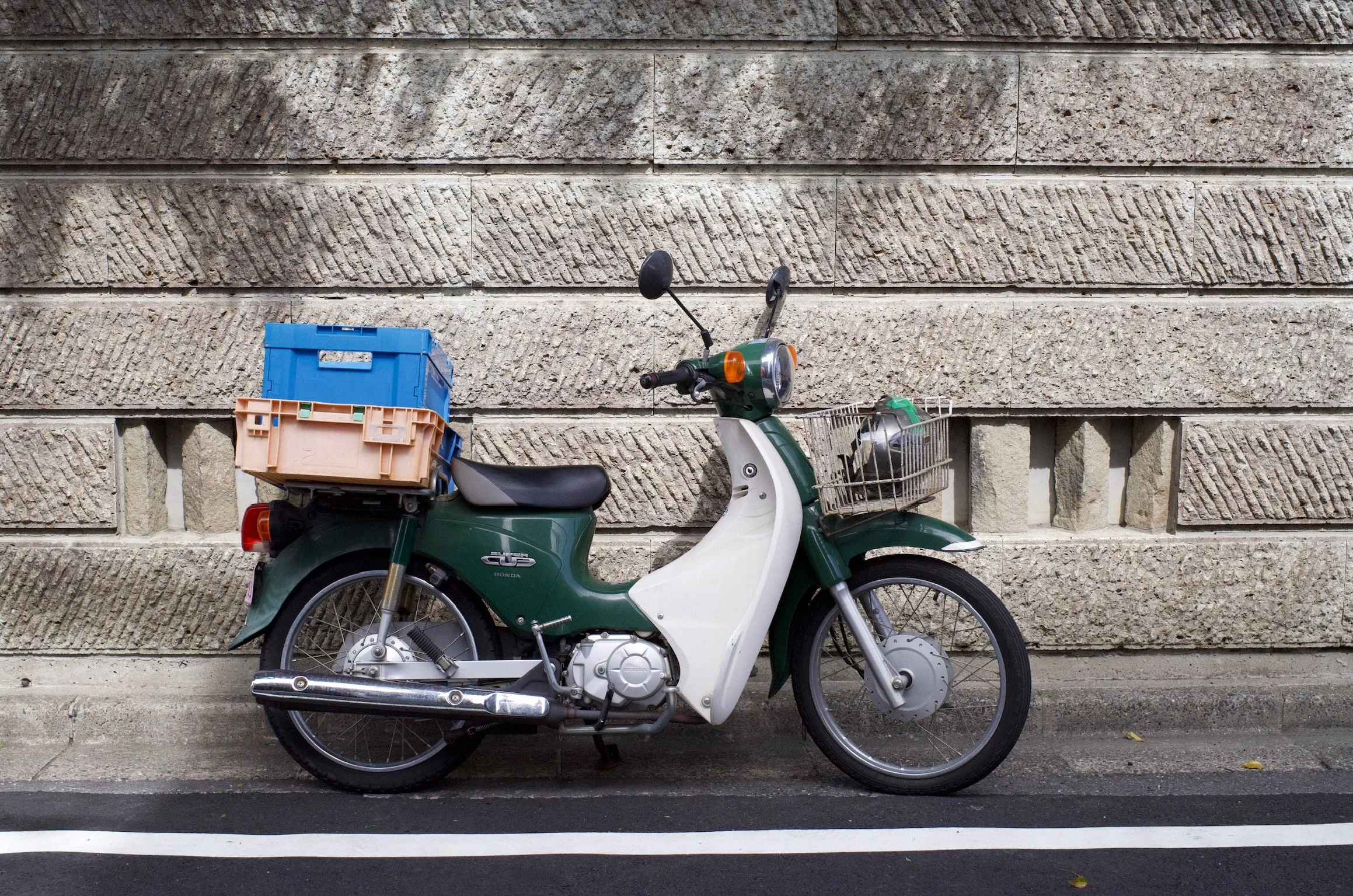
There are still convenience stores and vending machines, bicycles tucked against walls and trains rumbling nearby, but the scale is smaller. Narrow lanes run between low houses. Old wooden buildings sit beside newer ones. Temples appear at the end of otherwise ordinary residential streets. Cats sleep in doorways and on walls.
Most visitors arrive for Yanaka Ginza, the short shopping street at the center of the neighborhood. But the best part of Yanaka starts when you wander beyond it.
A piece of old Tokyo
Yanaka is often described as one of the best places to experience shitamachi Tokyo - the older, lower-rise neighborhoods associated with the city's merchants and working-class communities.
Part of the reason so much of its character remains is simply that Yanaka was fortunate. The neighborhood escaped much of the destruction of the Great Kanto Earthquake in 1923 and was again spared much of the devastation caused by air raids during World War II.
That doesn't mean you're walking through an untouched version of prewar Tokyo. Yanaka has changed, buildings have been replaced and new businesses continue to move in. But compared with much of central Tokyo, the older street pattern and human scale remain unusually easy to see.
It's a neighborhood better understood by walking through it than by looking for landmarks.
Down the steps to Yanaka Ginza
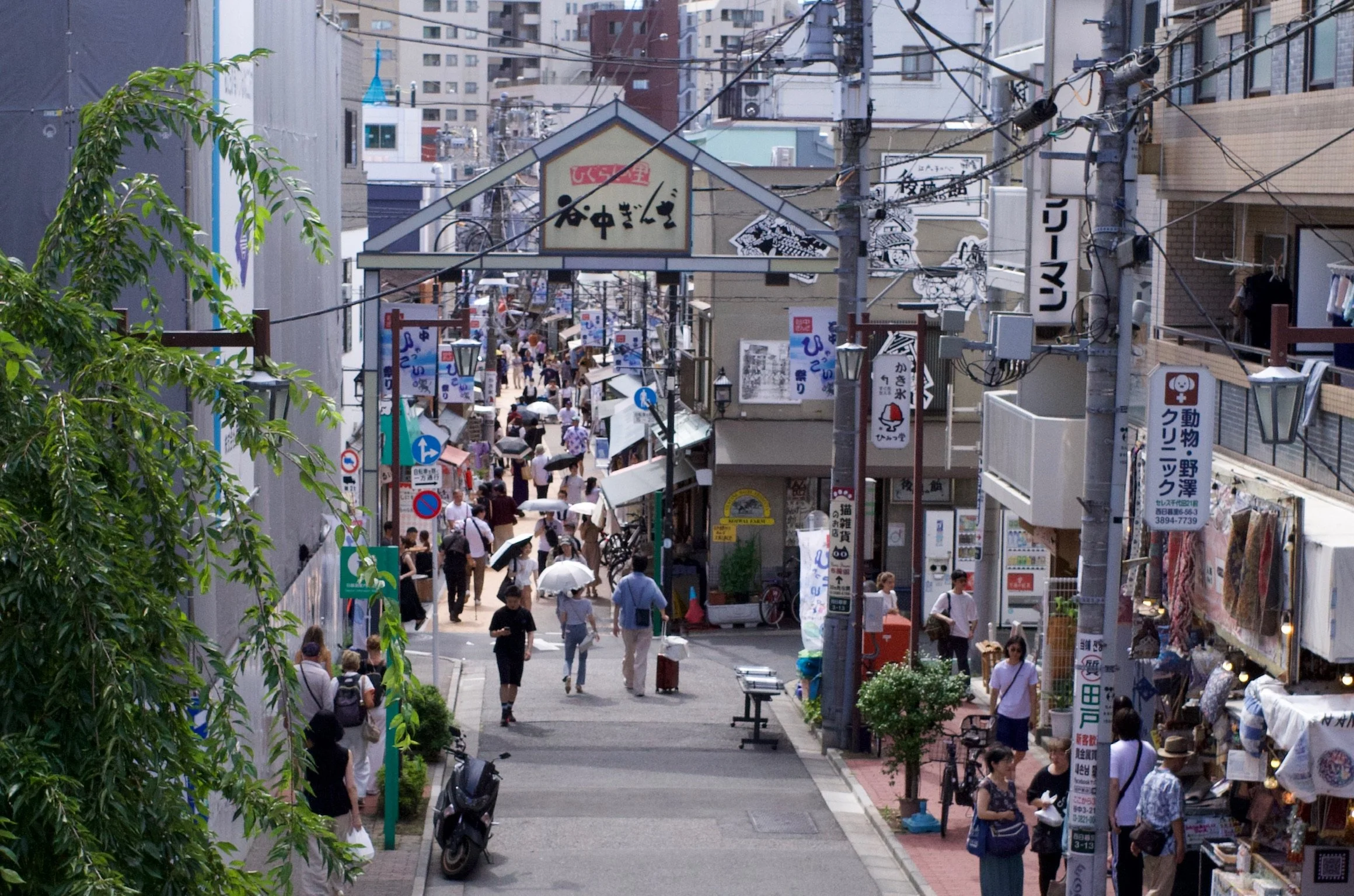
We started at Yuyake Dandan, the staircase leading down toward Yanaka Ginza.
Its name roughly translates to "sunset steps," and from the top you look over the rooftops and signs of the shopping street below. It's probably the most recognizable view of Yanaka and, unsurprisingly, one of its busiest.
Down the steps, Yanaka Ginza is only a few hundred meters long.
Small grocers, food stalls and family-run shops line either side. People walk slowly, stopping for snacks as they go. There are plenty of cats, or at least references to them. The neighborhood has embraced its reputation for feline residents and cat signs, sculptures and souvenirs appear throughout the street.
At Hitotema, we stopped for curry bread: crisp on the outside, warm and filled with Japanese curry inside. Niku no Suzuki was next for a freshly fried croquette.
Yanaka Ginza can be busy, particularly in the afternoon, but it still feels more like a neighborhood shopping street than an attraction built specifically for visitors. Locals are buying groceries alongside people taking photographs and lining up for snacks.
Beyond the main street
Walk away from Yanaka Ginza and the crowds thin remarkably quickly. This was the Yanaka we liked most.
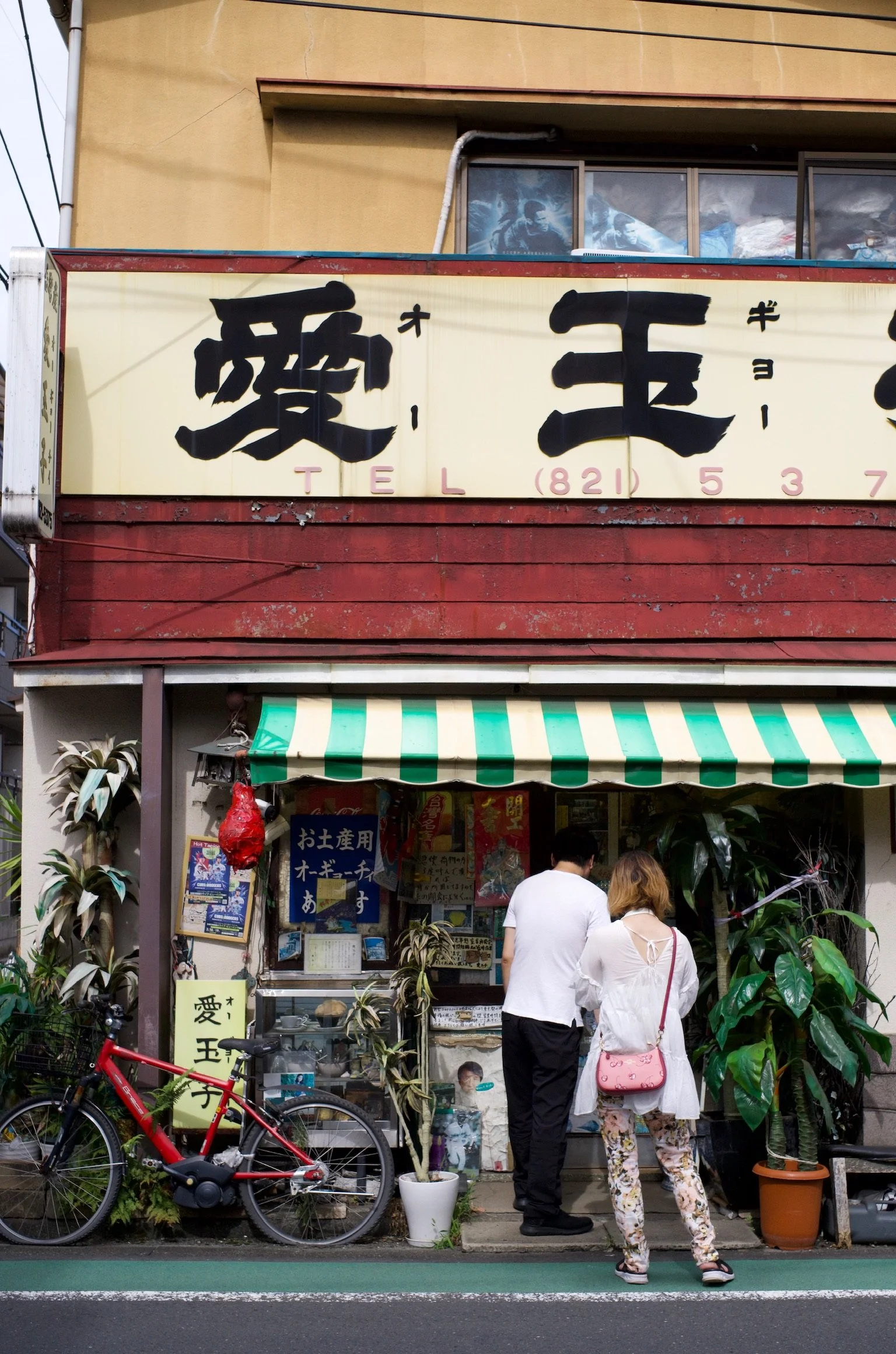
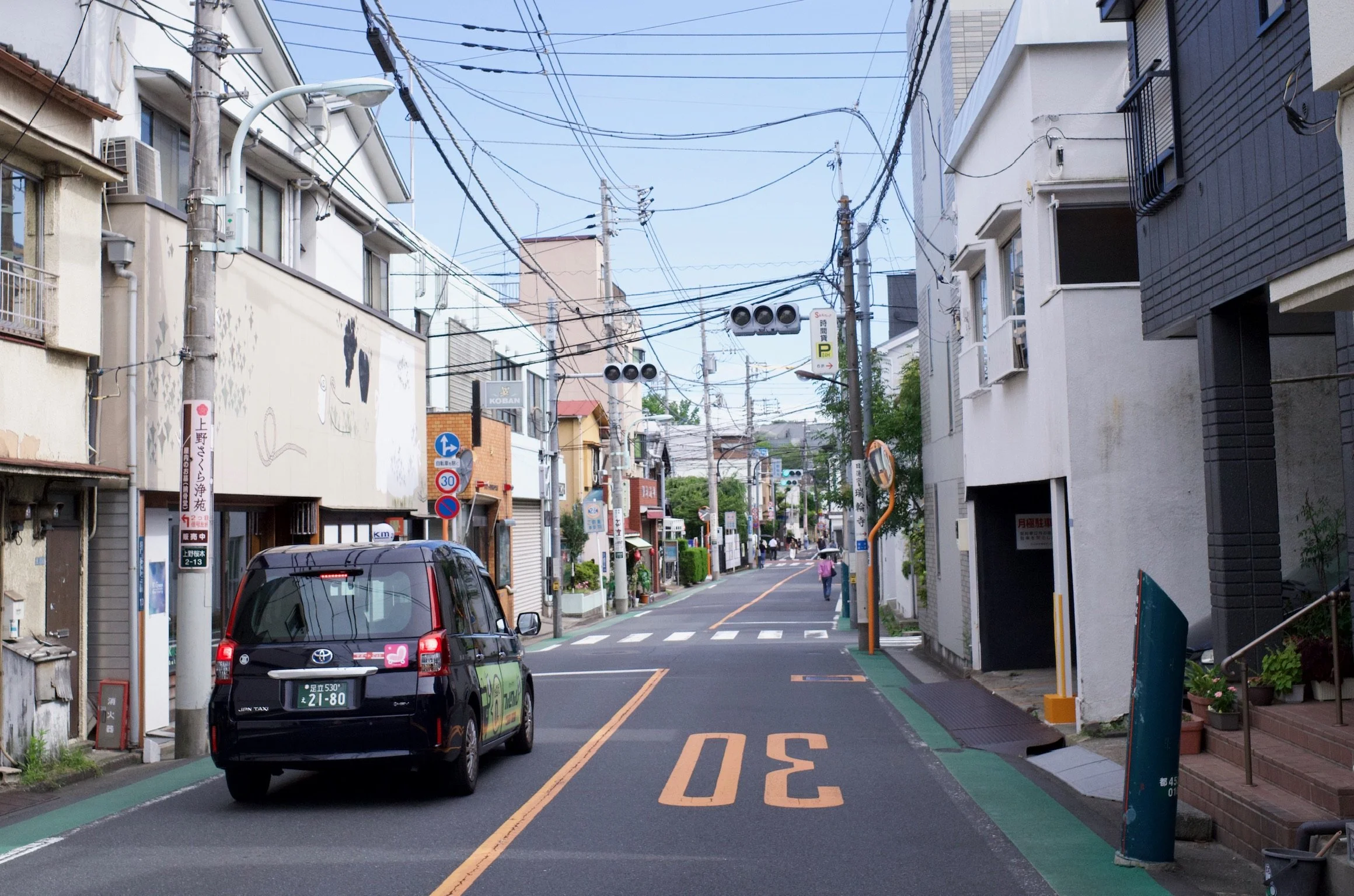
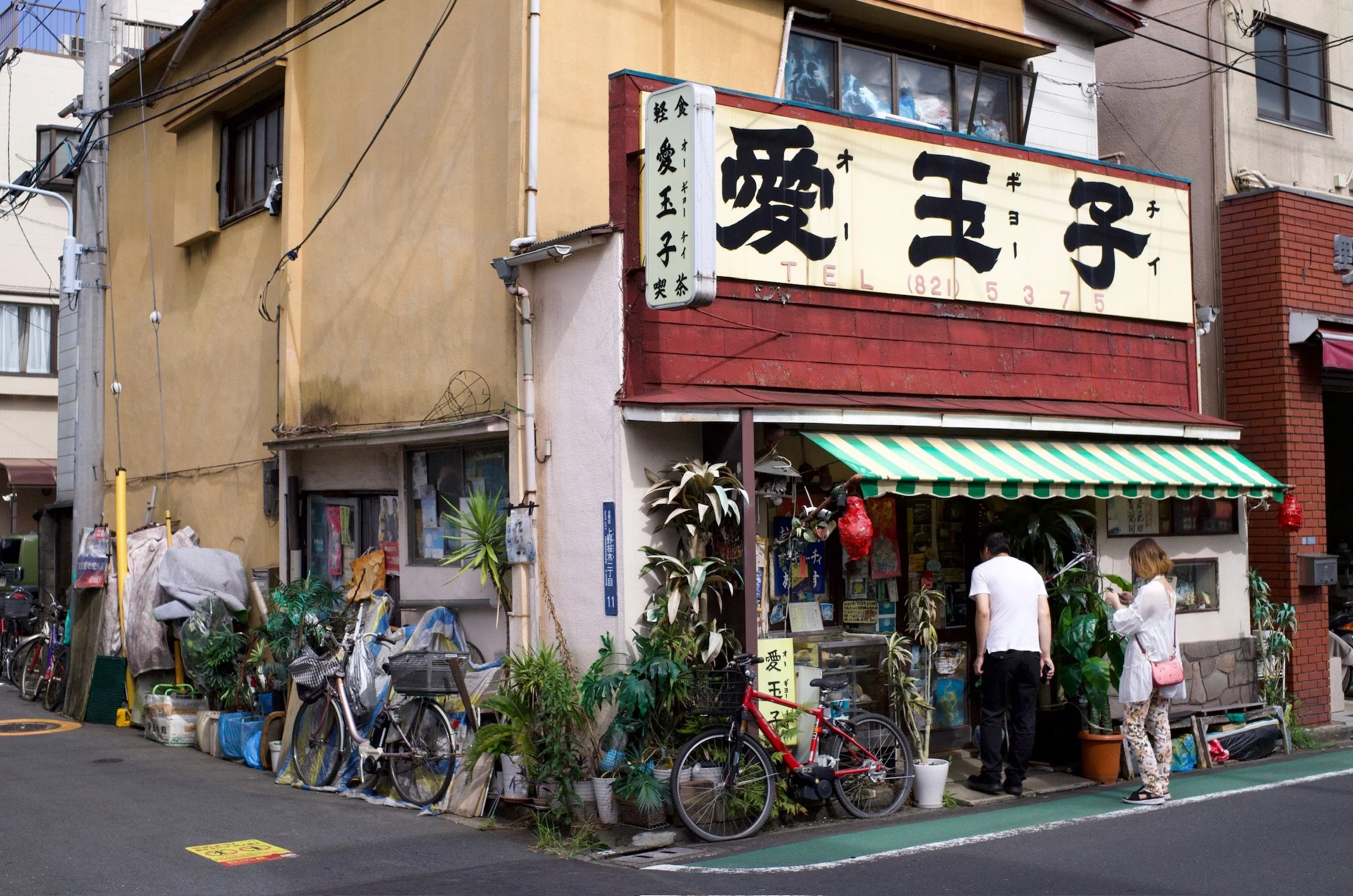
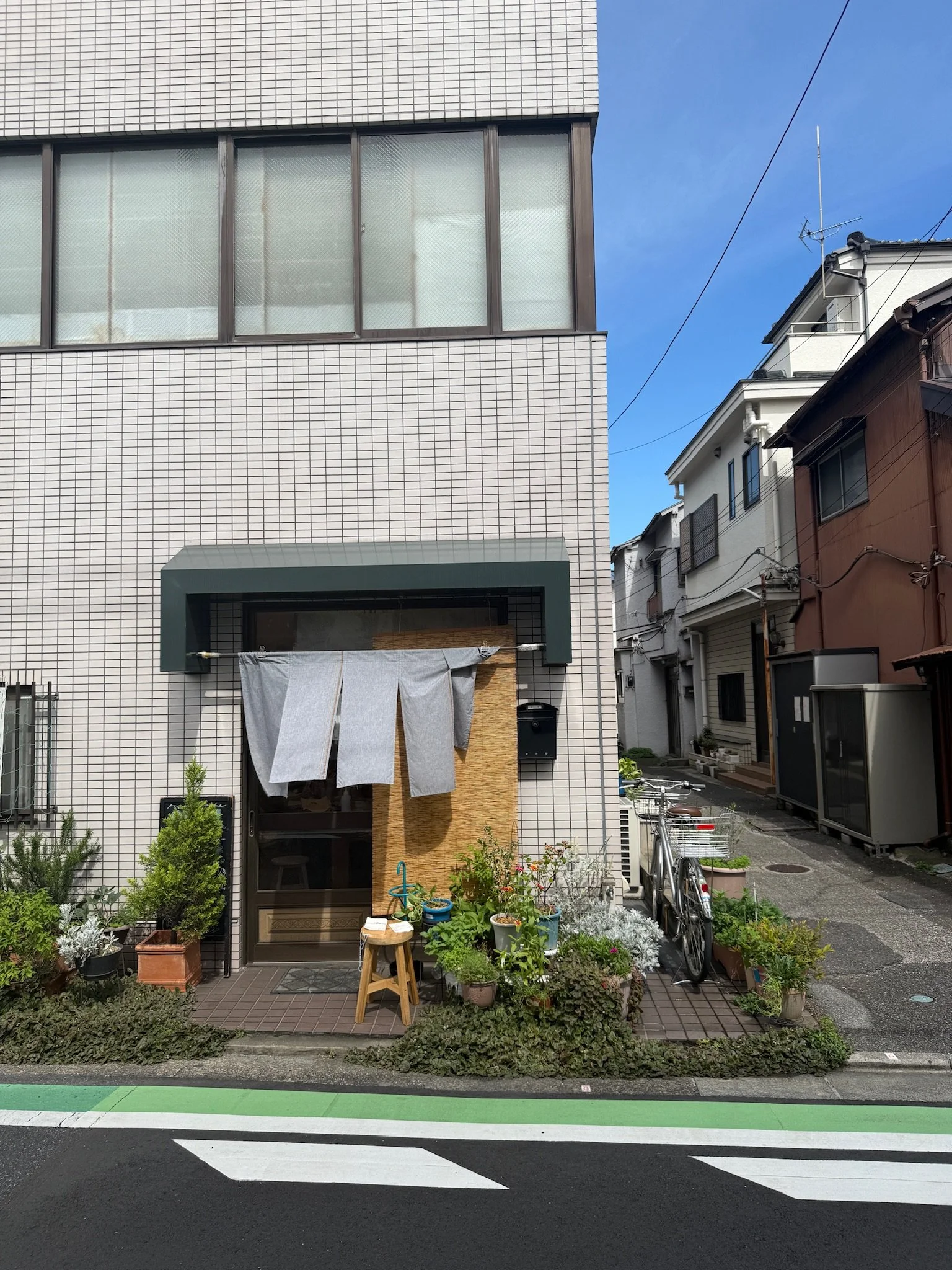
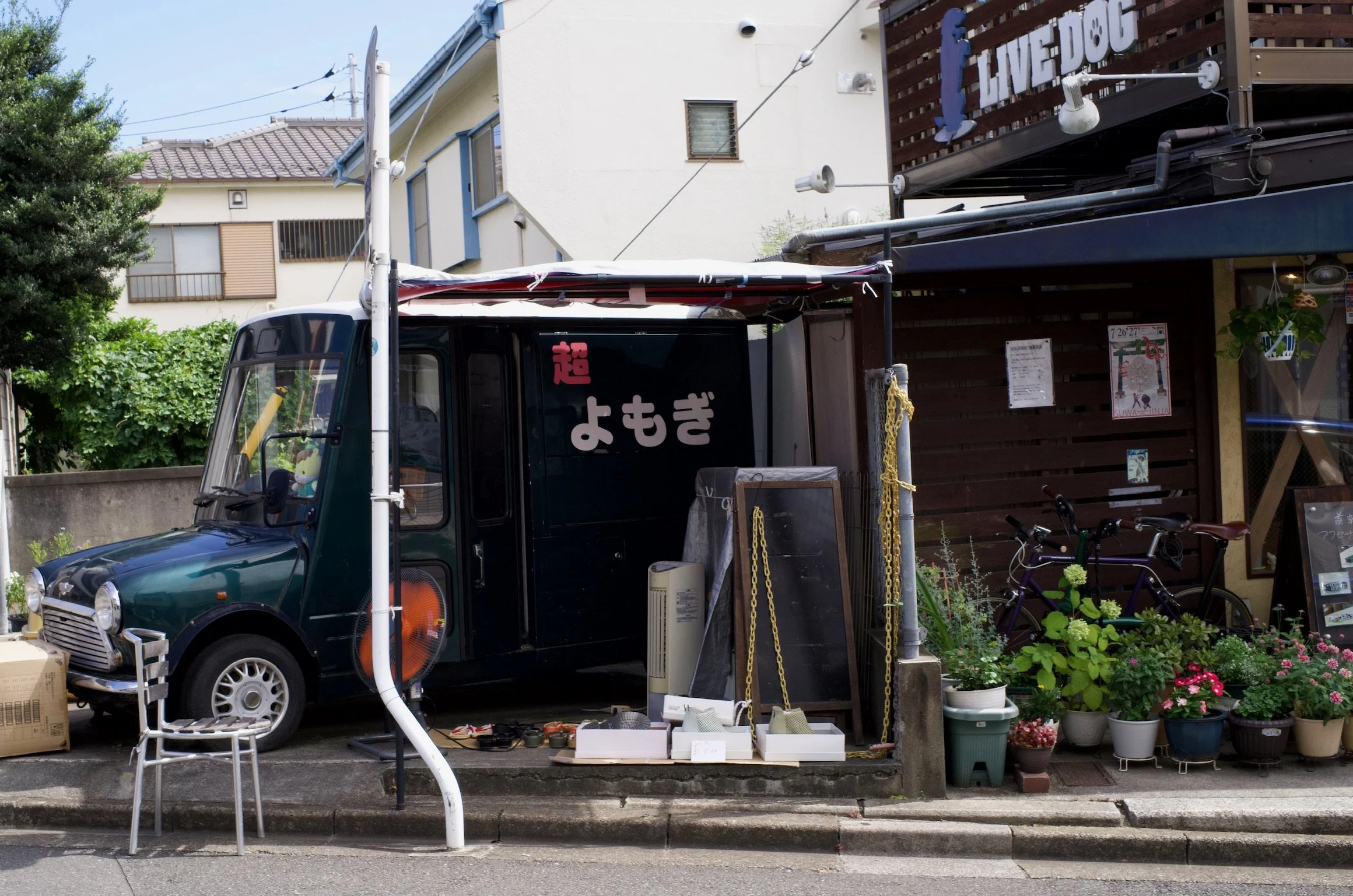
There isn't necessarily a particular route to follow. We wandered through residential streets, passing small gardens, workshops, cafés and old houses. Utility poles and wires crowd the sky above lanes barely wide enough for a car. Potted plants spill out from doorways.
It's not the polished image of old Japan you find in preserved historic districts. Old and new sit beside each other without much ceremony. That ordinariness is what makes it interesting though.
Yanaka is also filled with temples, a legacy of the Edo period, when temples were relocated to this part of the city. They appear so frequently that after a while you stop treating each one as a destination and start seeing them as part of the neighborhood itself.
Tennōji and Yanaka Cemetery
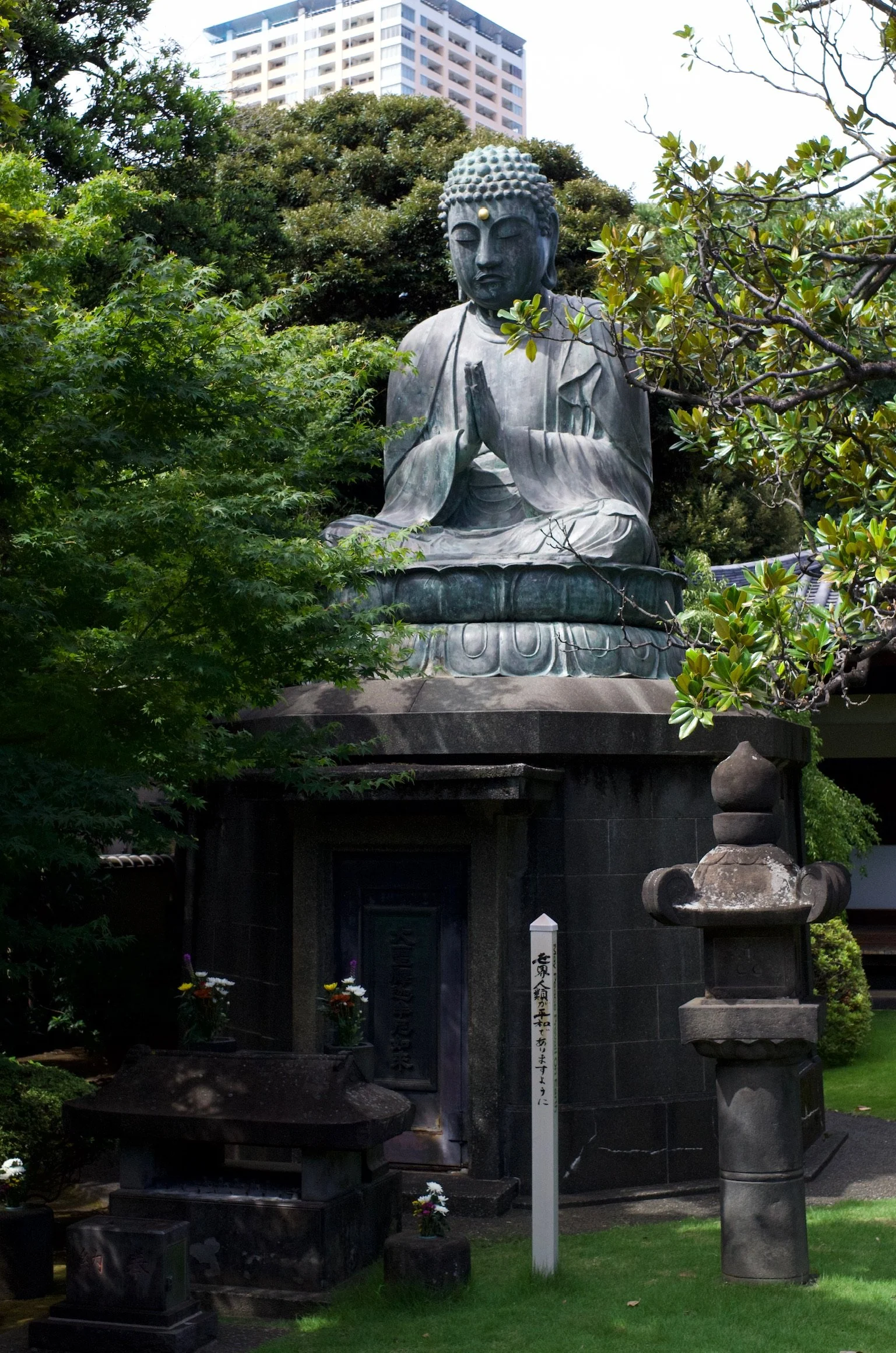
Tennōji Temple sits near the edge of Yanaka Cemetery and feels removed from the activity around Yanaka Ginza.
The temple has a long history, though the grounds today are quiet and relatively compact. A large bronze Buddha sits among the greenery, and from here it's easy to continue directly into the cemetery.
Yanaka Cemetery is enormous by neighborhood standards, with paths running between thousands of graves beneath mature trees.
People walk through. Cyclists use the paths. Houses sit along its edges. In spring, its avenue of cherry trees makes it one of the neighborhood's best-known places for blossoms.
The cemetery is also the burial place of Tokugawa Yoshinobu, the last shogun of Japan, along with artists, politicians and other notable figures from Japanese history.
Old buildings, new uses
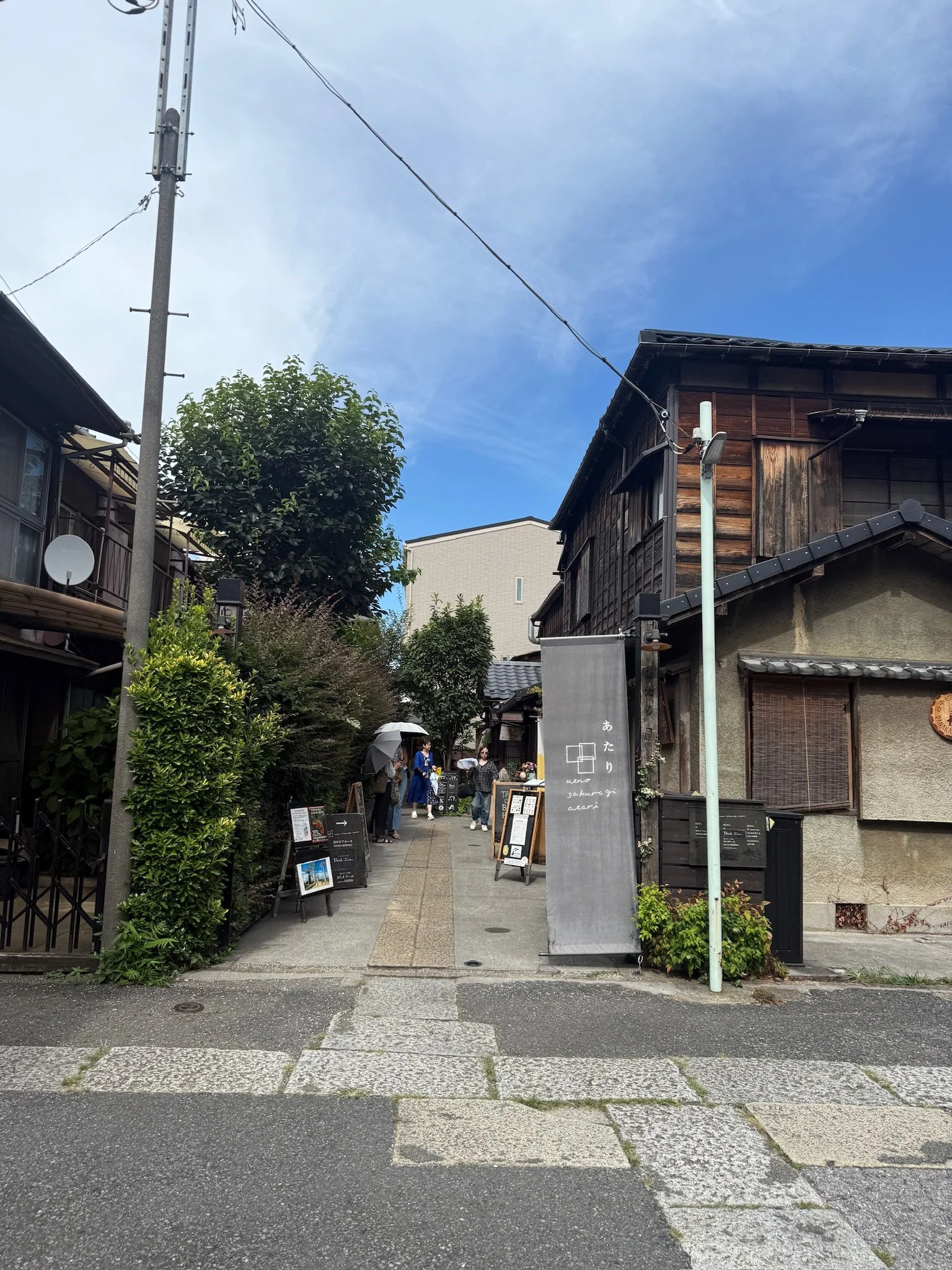
One of the best examples of what's happening in modern Yanaka is Ueno Sakuragi Atari.
The small complex occupies a group of old houses that have been restored and repurposed for shops and places to eat and drink. Instead of replacing the buildings, their age is part of the appeal. It's a good representation of the balancing act happening throughout Yanaka.
The neighborhood's history increasingly attracts the cafés, galleries, shops and visitors that inevitably change it. But some of the most interesting newer businesses are working within the old buildings rather than erasing them.
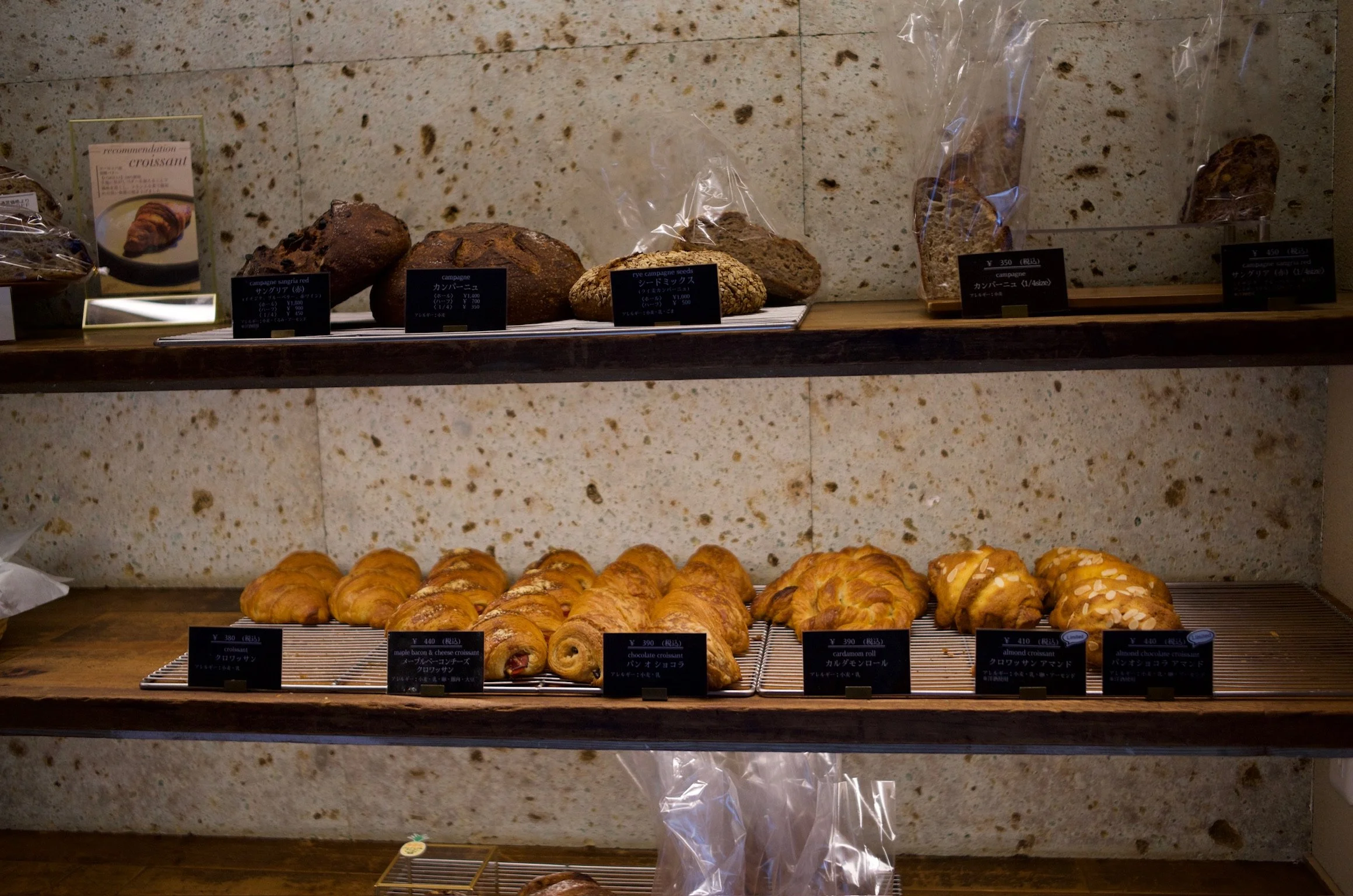
Nearby, we stopped at Think, a small bakery tucked into one of the old houses at Ueno Sakuragi Atari. We bought a piece of cream-filled bread, expecting it to be a quick snack before we kept walking.
Instead, it became one of those things we still talk about from the trip.
The bread was chewy and slightly salty, split down the middle and filled with a rich, milky cream. It was simple, but ridiculously good. The kind of thing you finish and immediately wish you'd bought another.
It also felt perfectly placed in Yanaka: a very good modern bakery operating inside an old wooden house, discovered in the middle of an afternoon spent wandering the neighborhood.
Looking for old Tokyo
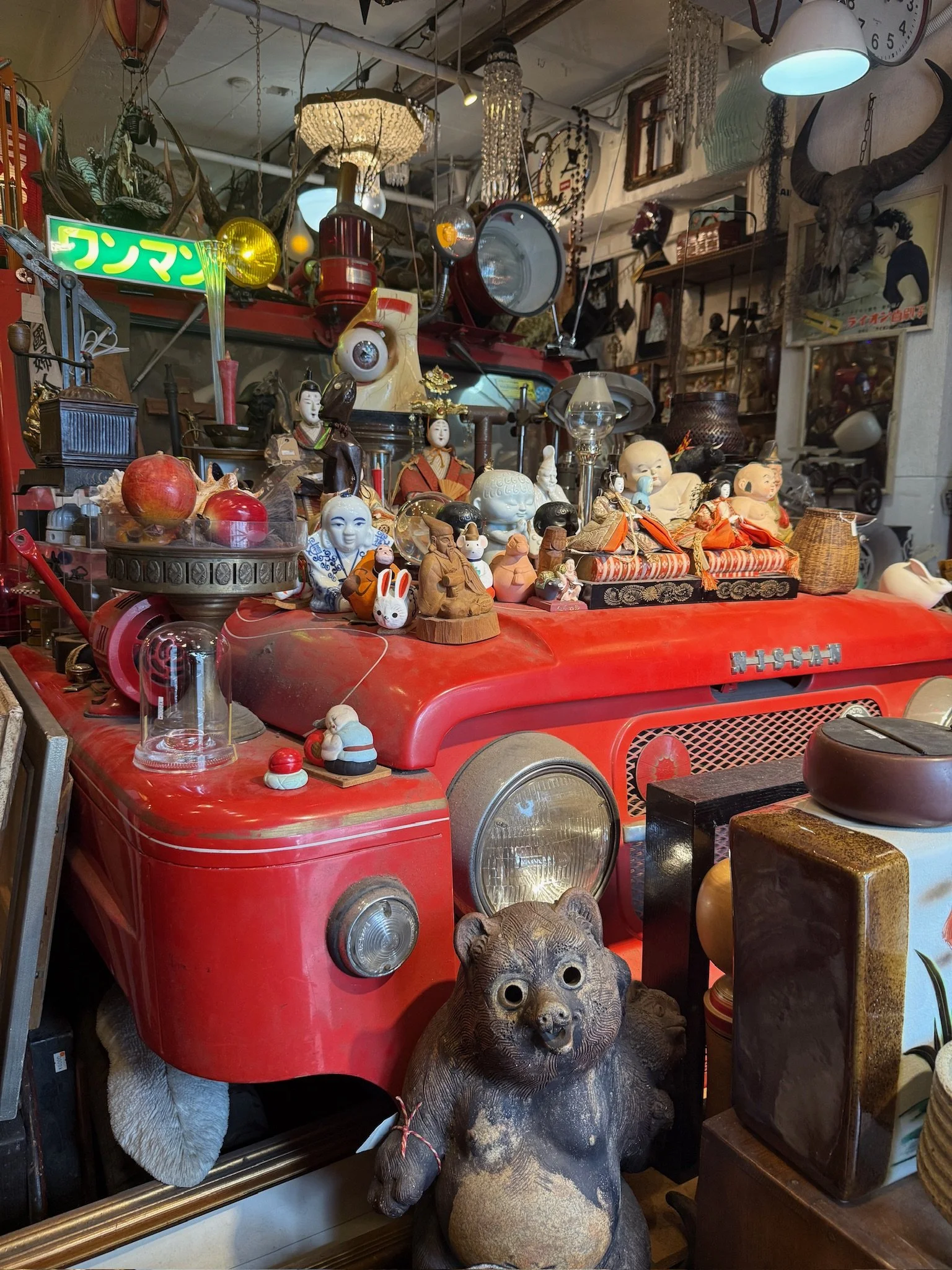
We eventually found Expo, an antique shop that feels almost impossibly well suited to Yanaka.
Inside, old objects crowd the space: housewares, signs, toys and pieces of Japanese life from decades past. It also makes sense in a neighborhood where so much of the appeal comes from things that haven't disappeared yet.
That's the temptation with Yanaka: to call it "old Tokyo" and leave it there.
But Yanaka isn't a preserved version of the past. People live here. Buildings are being renovated. New cafés open. Tourists arrive for Yanaka Ginza. Old shops close and others take their place.
Keep walking
If you only walk down Yuyake Dandan, eat a croquette and make your way along Yanaka Ginza, Yanaka is pleasant.
Keep going and it becomes much more interesting.
Walk through the cemetery. Follow a lane simply because an old wooden house caught your attention. Look into the tiny temple squeezed between homes. Stop at the bakery. Go through the door of the antique shop.
And if you have more time, keep walking south into neighboring Nezu or west through Sendagi. Together with Yanaka, the three neighborhoods are often called Yanesen, an area of northeastern Tokyo known for the same low-rise streets, small shops, temples and traces of older Tokyo. Nezu Shrine, with its red torii-lined paths, is an especially worthwhile addition if you have another hour or two.
But don't turn Yanaka into another list of things to see.
The main street gives you a reason to come here. The side streets are the reason to stay.